
New method of implant placement
 by
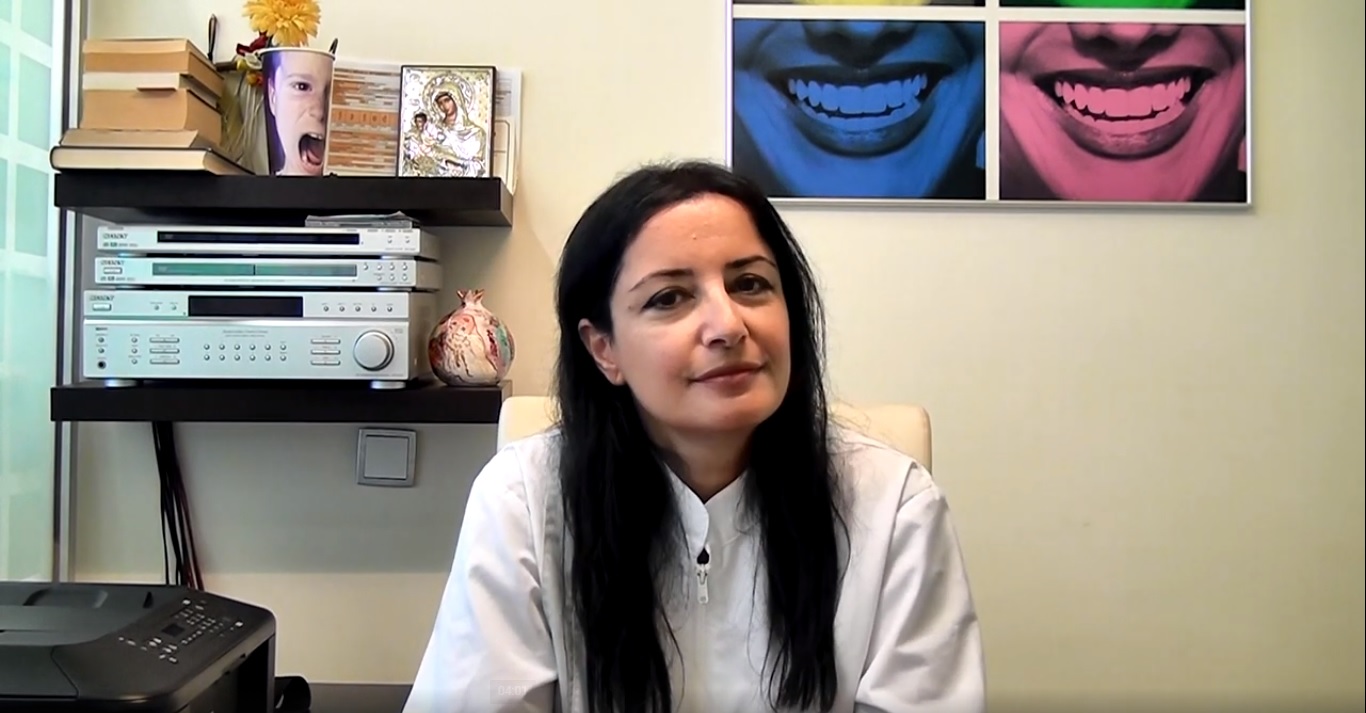
by Dentist Tania Hatzipanagiotidou informs us about the developments of implants. New method of implant placement.
What are dental implants
Implants in dentistry are titanium screws that replace the root of the lost tooth. When I have a tooth loss, one, two, three teeth, I place a titanium root, an implant, in the missing tooth. And that replaces the root. The implant is basically made of titanium. Titanium is a biocompatible material. It's the material that orthopedists have been using for so many years for knee and hip replacements. A material that becomes one with my bone, becomes osseointegration. This titanium screw that is placed into the jawbone is hollow inside and has threads. Into this hole of this screw, a shaft is later screwed which which which appears inside the mouth and a porcelain case or a porcelain bridge if I'm missing more teeth stands on top of it. These are the dental implants.
Developments in the placement of implants
There are developments in the placement of implants. First of all, I would like to say that it is known to some people who have also been a little bit involved in this issue that whenever a patient needs to have implants placed, we dentists ask the patient to have a CT scan of the jaw. We need the jaw CT scan to see how much bone I have in the area where I'm going to place the implant. This bone can be small in thickness or in height. It may also be of poor quality, it may be osteoporotic for example.
Difficulty in placing implants
So there were cases and there are still cases today in which the bone of the jaw was not enough to place an implant. The implant has a certain width and a certain height. It starts from some millimeters to end up in some other millimeters in height and in width. But there is a minimum width and a minimum height that I can say that yes, in this jawbone I can place an implant. That my bone is capable of accepting even the smallest of implants.
So there were cases in which the jawbone could not accept an implant because the bone was too short or the bone was too thin. And so we had to resort to the grafting technique. That is, to graft the jawbone to start from another technique. To put bone or in combination bone from another area of the mouth along with foreign bone to place it locally. Wait 4 to 5 months and then after the new bone has formed, place the implants.
Placement of implants with new drills
With the new technique there are some new drill bits that have come out that one has to be skilled in to use. So these drill bits, we use it to drill the hole that is needed to place the implant in the jawbone. These drill bits are special and with the bone itself, the jawbone itself I flatten the surface, widen and elevate it and even compact it in case the bone is for example as we said osteoporotic.
Difference with the previous drills
The difference with the previous drill bits we used is that these drill bits do not drill clockwise, they do not drill clockwise, they drill counterclockwise. So instead of the jawbone coming out so to speak it just goes inward and sideways and inward. And so the jawbone, with my own bone without a foreign bone, without using a foreign bone widens or raises. And so I can place an implant of adequate height and adequate width.
Implant placement problems in the upper jaw
Many times we had problems in the upper jaw. Because in the upper jaw we have the restriction of the sinus that comes up to here. The maxillary sinus comes down relatively low and many times we see on x-rays on back teeth shots of the upper jaw that because of the fact that the maxillary sinus comes down quite low I don't have the corresponding bone to put an implant in the back area. And there a lot of times, we heard what we say I need to do sinus elevation. That is to do a surgery that precedes the implant placement where I go into the sinus to lift the bottom of it, place an implant in the bottom of it, wait 5 months and then I can place implants.
Improved implant placement technique
Now in too many cases even for bone we get to 2-3 mm bone below sinus floor we can place an implant. So I can avoid all this process of implant placement that has to be done beforehand. Which is both time-consuming and costly and inconvenience is understood to be greater. And I must say that there are cases in which we have not had the expected result that one would expect using a foreign graft. So with this technique I avoid this whole procedure and move on. So it's a real hands-off approach.
This technique has been used in Greece for the last 3 to 4 years. It's been out for about 10 years now where all these tests have been done that need to be done. And for the last 3 to 4 years it's been used in Greece as well. So these years that it's been used in Greece I really have to say that here in our practice it has been a great help. That is, in cases in which we said that you can't put the implants in, you have to proceed first with the placement of the grafts. It's been hands off and I go straight to placing the implants. And the whole process becomes a breeze for the patient.
Does the new treatment hurt more or does it increase the treatment time?
First of all to say nothing hurts. Before we do anything the area is completely anesthetized. First, we put a jelly bean to numb the gums. And then we apply the anesthetic so the patient doesn't even feel the anesthetic needle. I should also say about the pain of implants in general. Because my patients have heard various things and they are most afraid to say that any pain after the implants are placed. Because during you are anesthetized you feel absolutely nothing.
When the anaesthesia wears off after placing the implants in a whole jaw for example, I will take a painkiller or an anti-inflammatory and after 5-6 hours I will not feel pain anymore. And the next day there is no person who is in pain. The next day there is no person who is in pain. I say this categorically because it happens in all cases. In fact, many people don't even take any pain medication at all the same day in the placement of the implants. Anyway to say that you will take a painkiller on the same day, the next day you will not need to take a painkiller.
Tooth treatment time
Now for the new technique the time is decreasing, not increasing. The time of the whole treatment is reduced. So no matter which way you look at it, you're a winner.
Cost of tooth treatment
As far as costs are concerned, is that not where we have won? Are costs going up?
So the cost is exactly the same. That is, this technique, we here at the clinic do not charge for this technique. Instead of using the other technique that we used to use in the placement of the implants, we use this technique. The cost does not increase at all. What it cost to place the implants with the technique that has been used for 30-40 years now in dentistry. Exactly the same cost exists when using the new technique with these new drill bits that make compaction in the bone.
Visit to the clinic in Glyfada
You can visit Mrs. Hadjipanagiotidou at her office in Glyfada. There all the treatments concerning the beautiful smile are carried out, such as tooth bonding, gum surgery, cosmetic dentistry and of course implants in Glyfada.
Images with dental implants
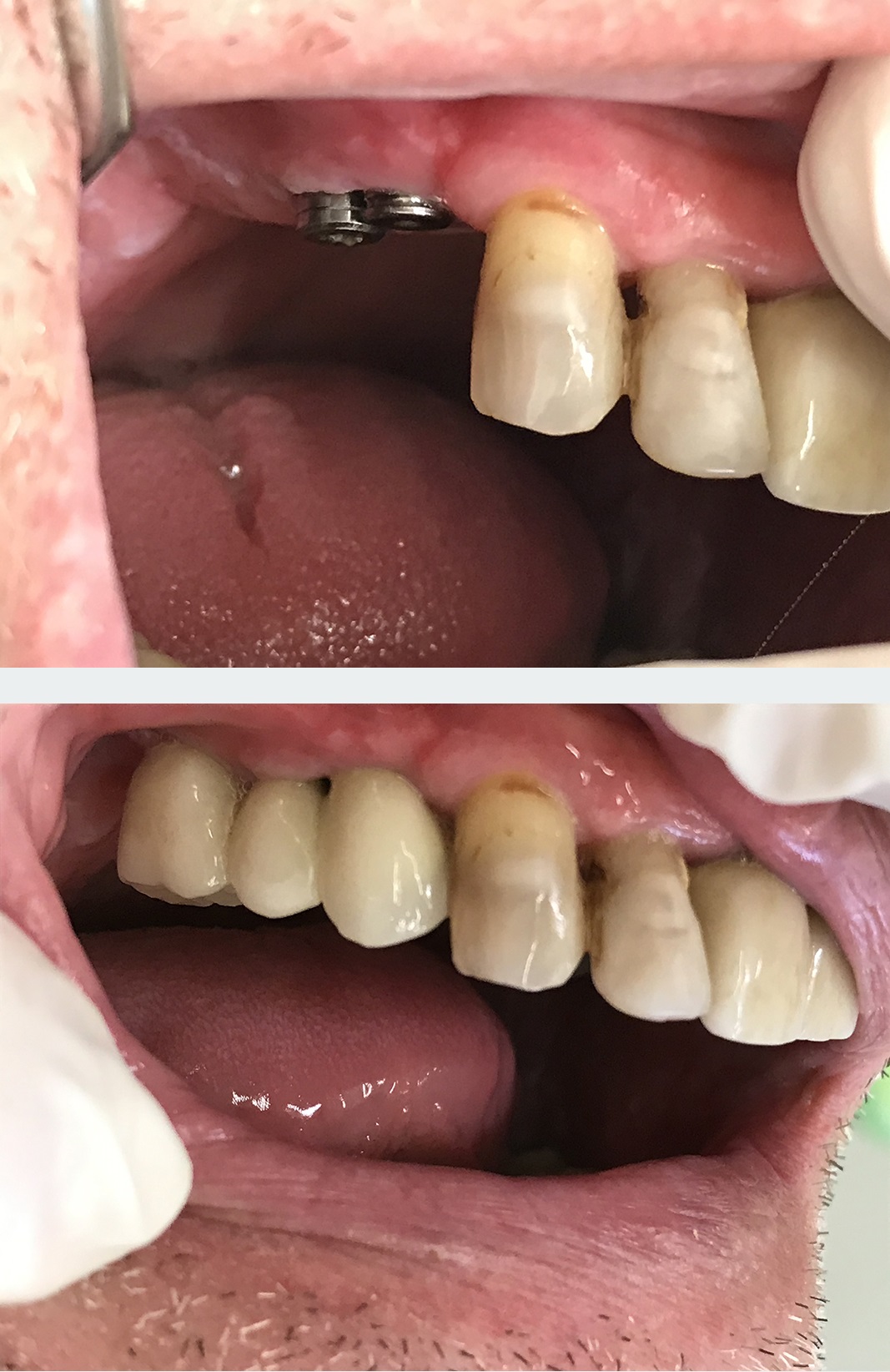
In the following link you can see what the mouths of patients looked like before they had dental implants and how much they improved afterwards. Here you will find pictures of patients who have had dental implants placed.
 English
  Greek
Greek